Monday, 16 July 2012

Book review: the Inheritance Trilogy

I've recently read the Inheritance Trilogy by N. K. Jemisin. I'd heard good things about the trilogy, and so my expectations were quite high. The books met those expectations with flying colours.

You know how some books can be put down and returned to later, and some books you just have to read all in one gulp? All three of the Inheritance Trilogy were 'gulp' books for me. I had some late nights while reading these. Not that I am complaining. I love it when a book picks me up and shakes me like that.

The Inheritance Trilogy is set in a world where the three Gods and their numerous children, the Godlings, are not vague distant beings, but rather live in close and frequent contact with humans. The books are set some time after a terrible war was waged among the Gods and Godlings, after which the losing side was bonded to become servants of the ruling human dynasty. The trilogy follows the after-effects of the war, and details how the wounds that the war left begin to heal. Each of the three books follows a different main character, something that I am not usually fond of, but which works very well for this series.

The Hundred Thousand Kingdoms

The first book in the trilogy follows Yeine, a young woman from the north who is also related to the royal family, the Arameri, that rules over the empire. Yeine is summoned to court to be a pawn in a dangerous political game that will lead to the throne for one of her cousins, but certain death for herself. Instead of playing the part of the poor pawn, Yeine becomes enmeshed in the affairs of the captive God and Godlings held in the palace, and their bid to finally win their freedom.

The Hundred Thousand Kingdoms is a great introduction to the trilogy, and quickly demonstrates Jemisin's writing strength – getting into the minds of her characters and dealing with the psychological implications of the events in the book in a convincing manner. Her weakness is also quickly apparent; Jemisin is not as good at describing the physicality of the world her characters move in as she is at describing the internal landscapes of their minds. This particular combination of strength and weakness leads to a writing style very different from the bulk of epic fantasy fare. I found the change refreshing.


The Broken Kingdoms

Ten years after the events of The Hundred Thousand Kingdoms, a blind painter called Oree Shoth, who can see magic even though she can't see the world around her, finds a God in her rubbish heap. Oree is plagued by Gods, so doesn't think too much of her find. She simply takes him in and feeds him. But this particular God is nothing but trouble for those who know him, and Oree is soon caught up in a plot that she doesn't understand but which only she can stop.

As I mentioned above, Jemisin is better at describing her characters' inner lives than the external world they live in. This writing style is exceptionally well-suited to telling the story of a blind person. For this reason, The Broken Kingdoms was my favorite of the trilogy. All the elements of the story and the overall feel of the trilogy came together most harmoniously in this book.


The Kingdom of Gods

Many years after The Broken Kingdoms, the trickster child Godling Sieh has a bit of a problem: he's growing up. Sieh must learn how to be mature despite his own nature, and how to accept the responsibilities that have been dealt him. In the process, he uncovers truths that will shake the world of the Gods to its very core.

This book ends the trilogy with a bang, one that will linger with you as you ponder over its philosophical implications for days after you finish the book. It draws the plot threads of the series together, and although it does not tie them all neatly, it leaves the story in a place where we can be sure that the resolution we want will happen at some stage in the future. This book also introduces a fascinating internal conflict for the main character, Sieh, one that is beautiful and thought-provoking in its simplicity and poignancy.


Jemisin has an individual writing style. I liken it to a sketch by a master artist; although the scenery is indicated by the barest of lines, the face of the subject is worked in such exquisite and realistic detail that the viewer finds the breath caught in her throat as she looks at it. The characters' motivations and psychology are so well crafted that any writer will want to study these books to try to figure out how she did it.

Because of the lightness of the scenery descriptions (as mentioned above) and the complexity of the character Oree Shoth, The Broken Kingdoms is by far the best book of the series. It does not matter that the world is hazy; Oree is blind and cannot see it anyway. I think this was an elegant matching of character and writer, and it is something that has made me think: what kind of character would suit my writing style? I'm not sure.

Learn more about N.K. Jemisin:
Visit her webpage
Follow her on Twitter

Friday, 6 July 2012

First draft of my novel complete!

Today I finished the first draft of my novel Symmetry Breaking (tentative title).

I started the draft on 6 March, so it took me 4 months and 1 day to write. I had an initial estimated word count of 100,000 words, but in the end it came in at 77,975 words. Whatever. The story knows better than me how long it should be, right? And it may get longer (or shorter) in revisions.

Ugh! Revisions! I am a bit petrified of them. I know that the book is far from finished yet. I didn't revise as I wrote, and so the book is currently filled with plot holes, cardboard characters, and unconvincing motivations. So. Much. Work! I've got a list of changes I've already realised I've got to make, waiting for me to implement. Some of these are going to be huge. For example:

  • Introduce [minor character] and [minor character] earlier. (Um, where?)
  • Chapter 15 is boring. Fix.

Seriously, I copy-pasted that second note exactly.

But at least I have that lump of clay on the wheel now, ready to be shaped.

I will start the revisions on 1 September. Until then, I will be leaving the novel to sit, so that I have some distance from it, and catching up with all the other things I have procrastinated while I have been in Writer Mode. Which is a whole other reason to panic.

Wednesday, 4 July 2012

'The Wrong Camera' available on Kindle!

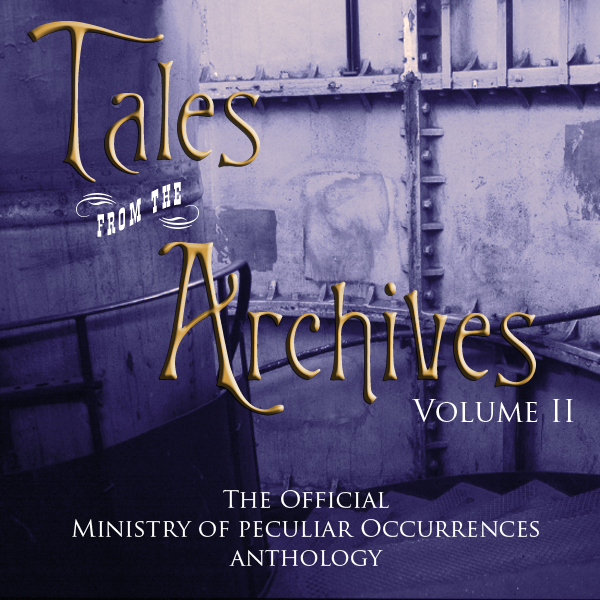
My story in Tales from the Archives, 'The Wrong Camera', is now available in eBook version through the Kindle store. At the moment it doesn't seem to be available for people in the Asia/Pacific region, but even so, I'm really, really excited to see my name on Amazon. I'm searchable, peoples!

And, oops, it seems there is already an author going by my name (I don't have a Dallas perm, BTW). Good thing I am getting married at the end of the year and my name will be changing.

Friday, 29 June 2012

My story 'The Wrong Camera' has gone live!

Awesome news! My short story, 'The Wrong Camera', has gone live on the Tales from the Archives podcast! Listen to the audio on the Ministry of Peculiar Occurrences website. The 99c eBook version of the story will be available shortly, but in the mean time, you can listen to the audio for free.


I'm really excited about this publication, not least because it is my first publication ever! Also, I am a big fan of the Ministry of Peculiar Occurrences series, and it is a great honour to have the opportunity to contribute to the world, even if in a small way.


Thank you, Pip and Tee, for this opportunity. You guys are amazing!


Friday, 22 June 2012

New poll: What is your favourite book medium?

I've put a poll over in the right-hand column, titled 'What is your favourite book medium?' I'm interested to know how people are sourcing and consuming books at the moment, because I've heard a lot about how many people are putatively turning to eBooks, and I'd like to have a go at confirming or denying that for myself. (I work with scientists, OK?)

I'll be honest here, and give you my answer:
While I'll always love physical books, and always want to collect the books most special to me, I like reading on my Kindle. It is light, portable, and convenient (unlike some books I could name *coughTowersofMidnightcough*); the books are cheaper and so it is less of a risk to try new authors; and I can change the font size at will.

Please vote in the poll to let me know your favourite way (now, in 2012) of acquiring and reading books.

Monday, 18 June 2012

iPad = useful

So, the other week I bought an iPad. I was somewhat afraid that it would be a frivolous purchase, something to gather dust, but I am glad to say that is not the case at all. Some highlights of my time so far with my iPad:

  • Checking Twitter and my RSS feeds before getting out of bed on frosty weekend mornings.
  • 'Quickly looking something up' actually being a quick process (my computer is a few years old and so takes a few minutes to start up).
  • Curling up on the sofa to read the publishing world news.
  • Best of all, writing in Simplenote on the bus to and from work, and then synching my words to my Scrivener project file when I get home. A few times I have met my daily word target before getting home.

So, in summary, tablet computers are great for people like me. In a matter of days, my iPad has made my life more efficient and comfortable, and has unshackled me from my hours of sitting at my computer desk every night. Brilliant.

Thursday, 14 June 2012

Obligatory Prometheus post


A lot of people are giving their opinions on the movie Prometheus at the moment, so I don't feel like I need to give a full review. Others have already said it better than I could. But I thought I'd share a few thoughts on the movie. In no particular order:

  • OMG why are the scientists in this movie so stupid? They don't act like real scientists at all. For example: they come across their first alien carcass. Biologist guy: 'It's creepy in here; I'm going back to the ship.' Er, excuse me? A real biologist's reaction would be 'Woohoo!' *Take ALL the samples*
  • Idris Elba? You, sir, are awesome, and I love your work. The captain was the only smart character in the movie, and therefore my favourite.
  • Why is everyone going on about Charlise Theron's arse? Am I the only one who thought Noomi Rappace had a nicer figure? That woman is fit as a fiddle, and yet not a stick insect. I envy her thighs. Also, she wields an axe like a pro.
  • I keep mulling over the character David's obsession with TE Lawrence, and the implications of that and why he did what he did. Also, creepy Michael Fassbender is creepy.
  • Charlise Theron's character was utterly pointless to the movie. Which was a shame, because I think the character could have been interesting in a different story.


Have you seen Prometheus? What did you think of it?